Karin Bablok
June 30 - September 6, 2018
 Karin Bablok
Karin Bablok is one of the most important German ceramists of her generation. After graduating from high school, she quickly set her sights on an apprenticeship in clay, which she completed in 1988-91 with an apprenticeship tour of Germany, Ireland and the USA. On her return, she continued her studies at the ceramics school in Höhr-Grenzhausen (Rhineland-Palatinate), then from 1992 to 1995 at the University of Koblenz, where she studied art. By 1993, however, her work was already attracting attention, and she won her first prize, later followed by numerous others, not only in Germany but also in Japan and Korea. Her work can be found in numerous museums and private collections.
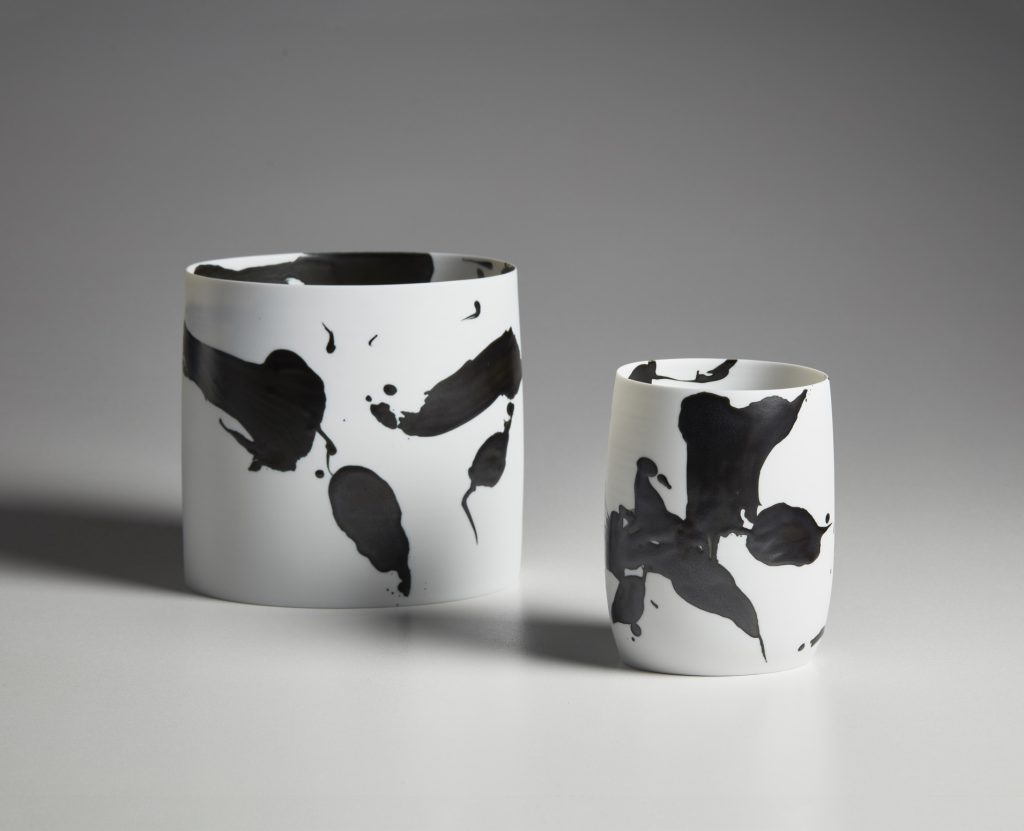
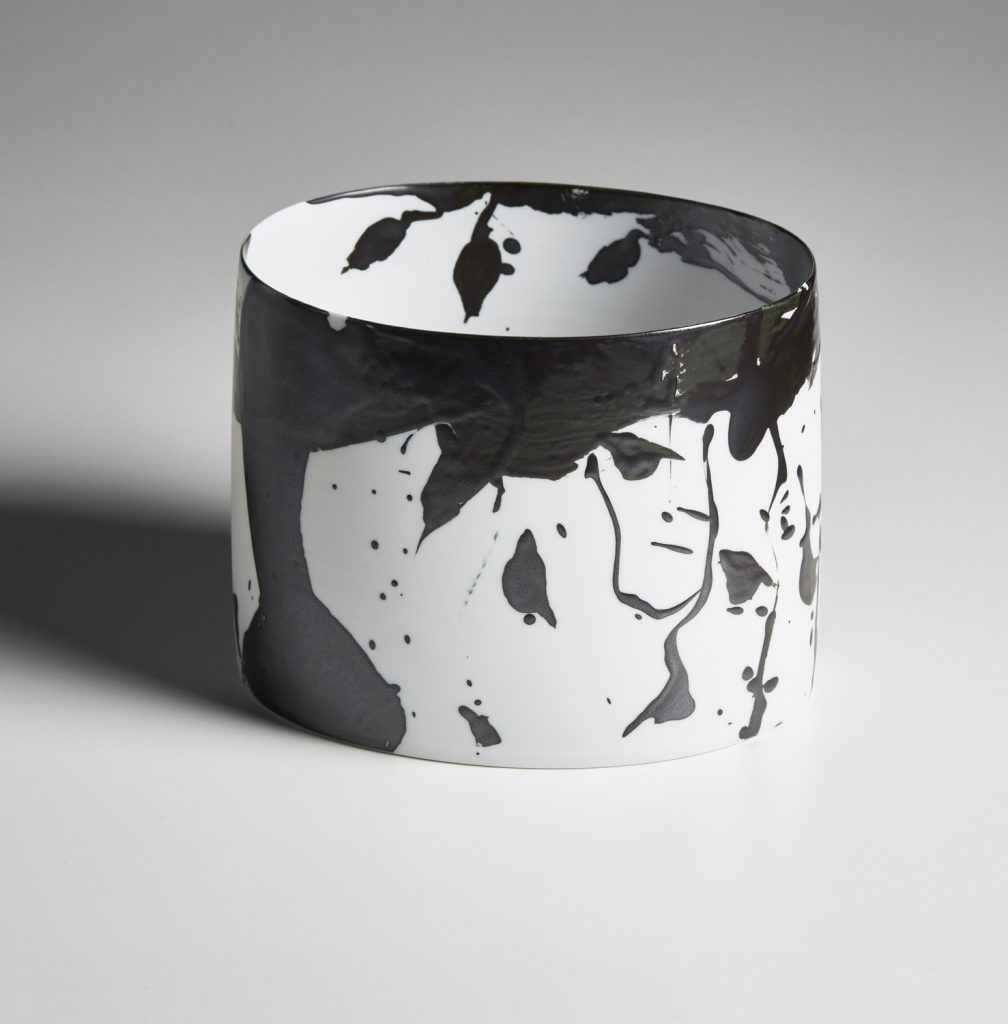
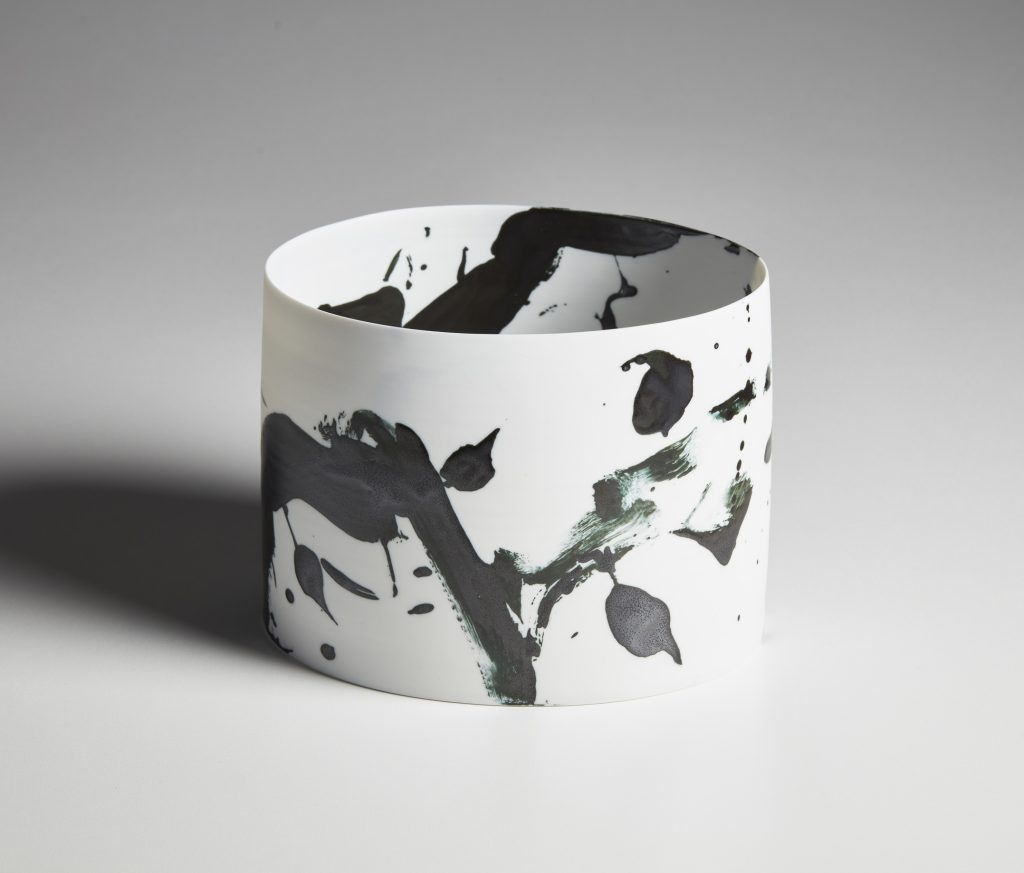
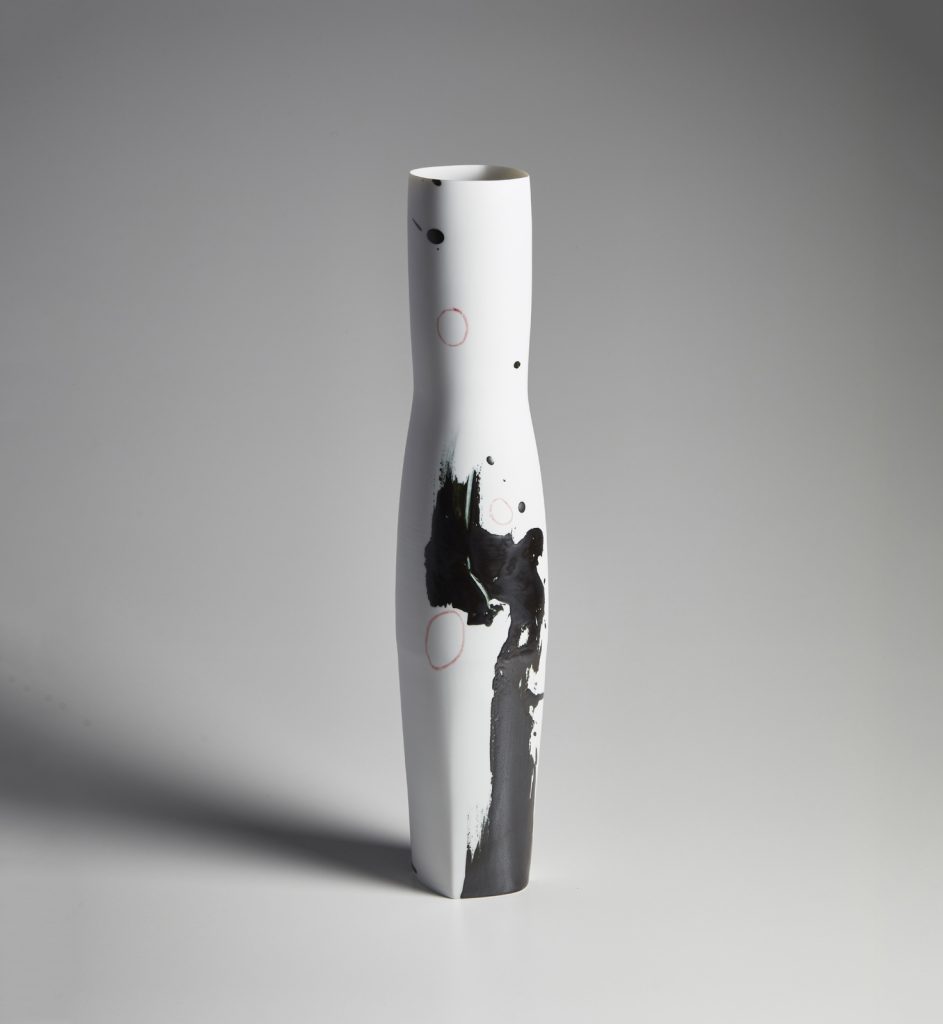
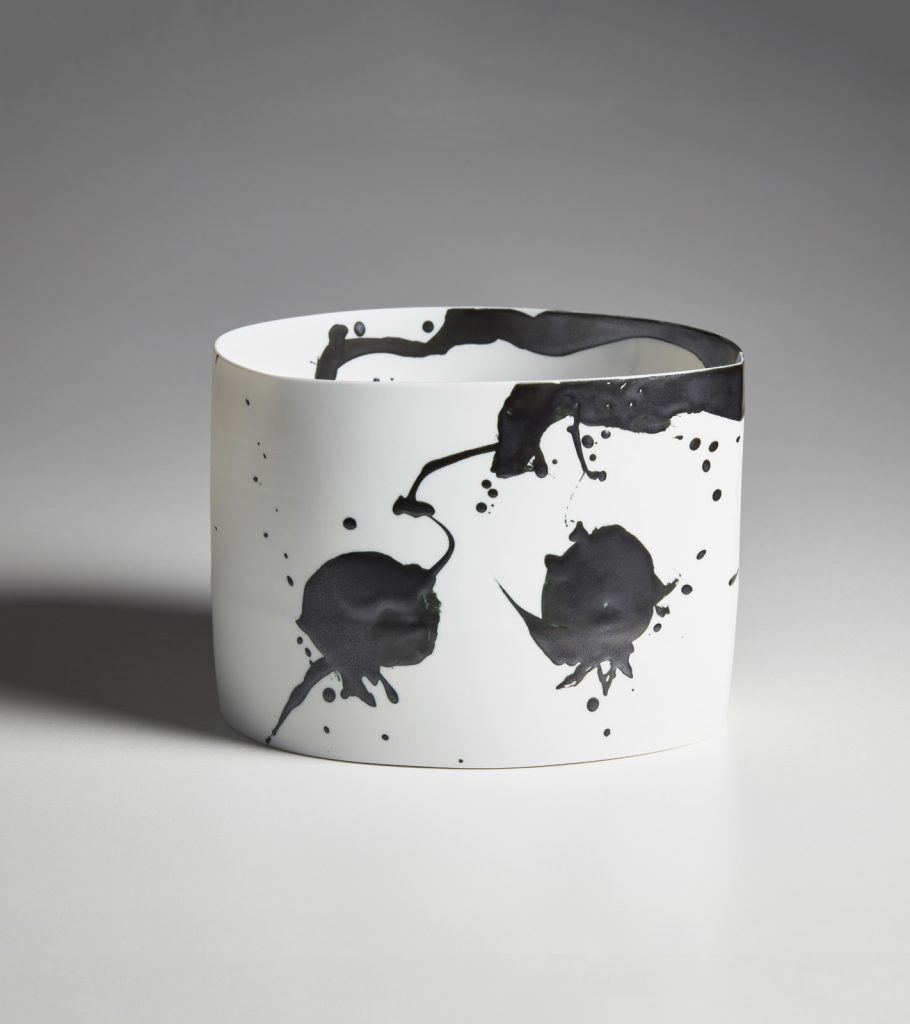
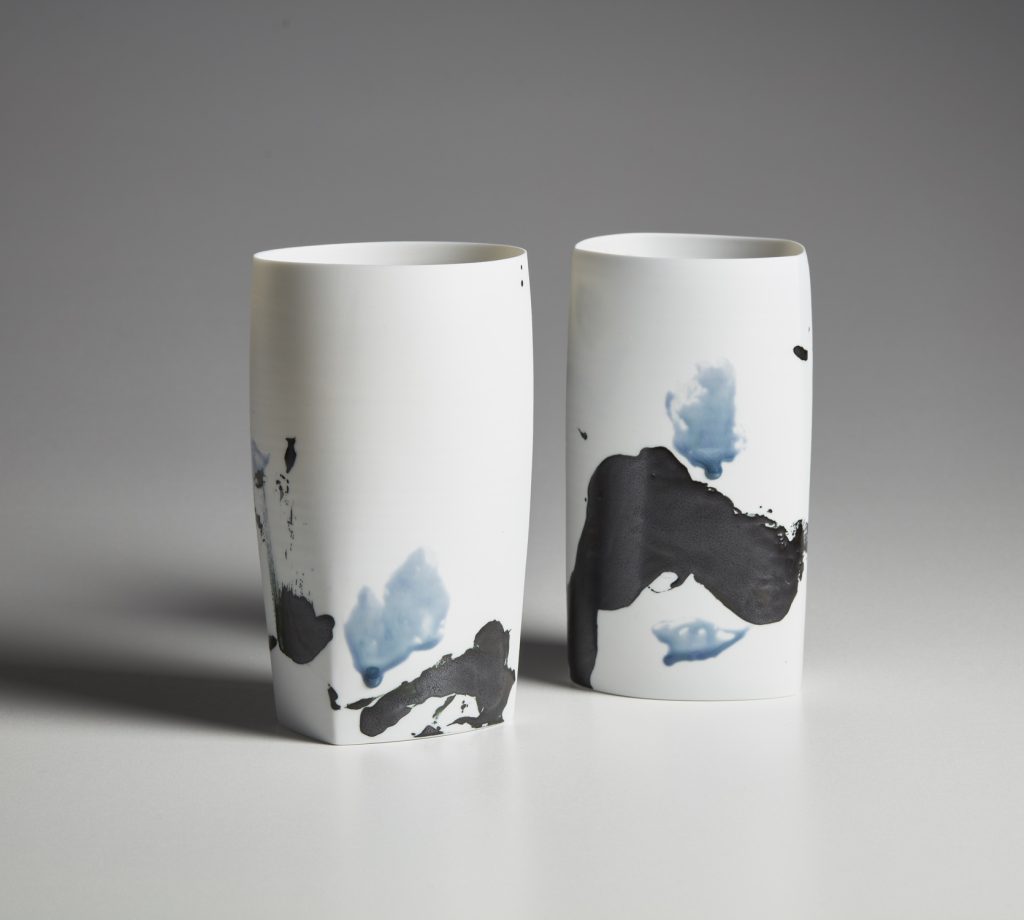
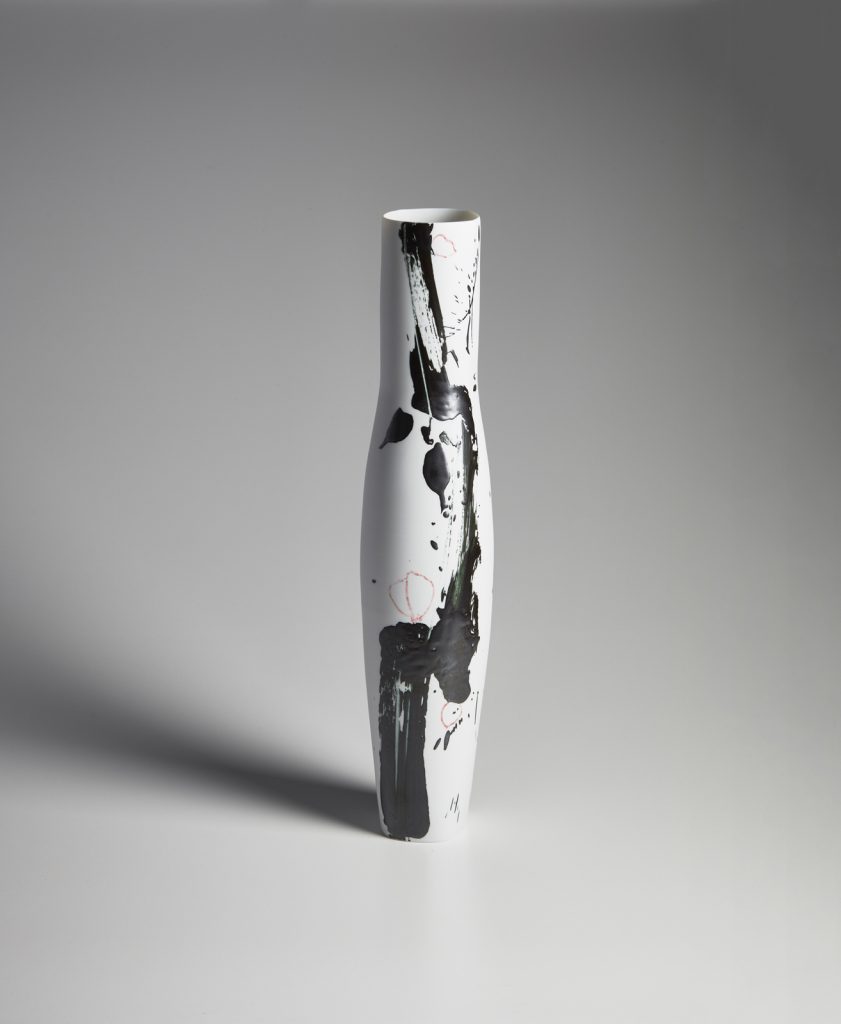
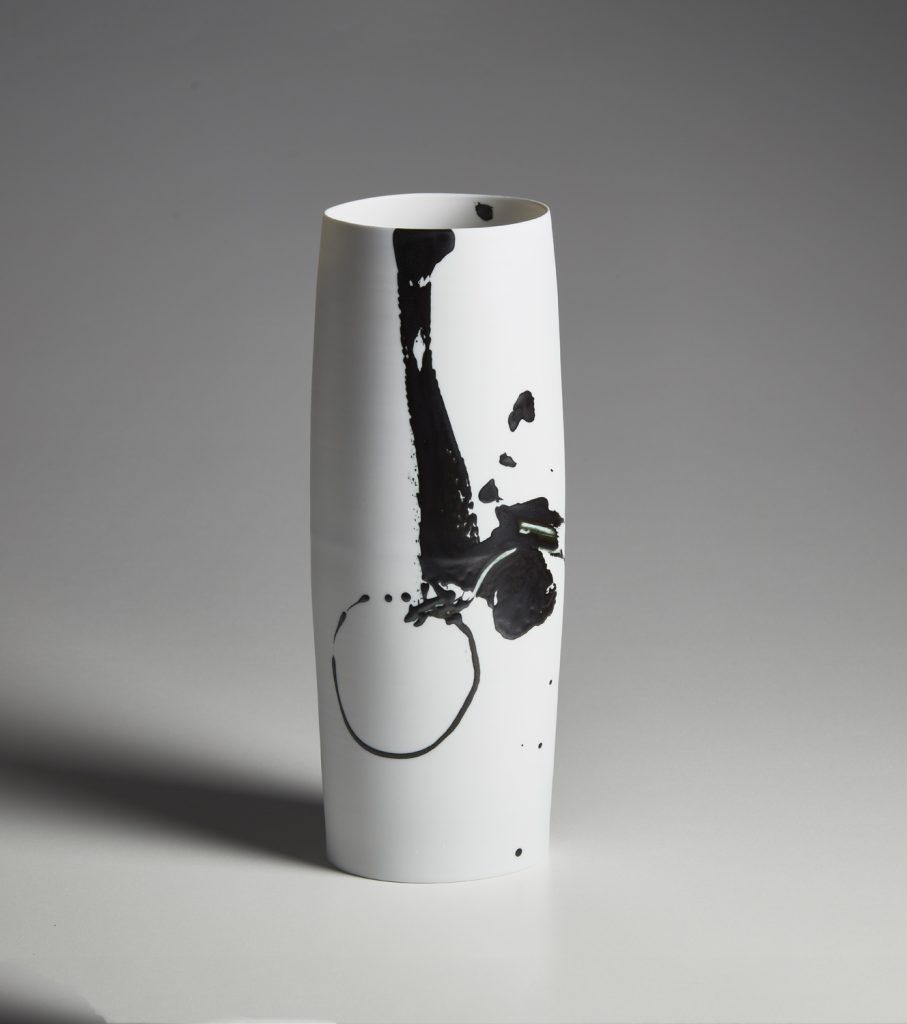
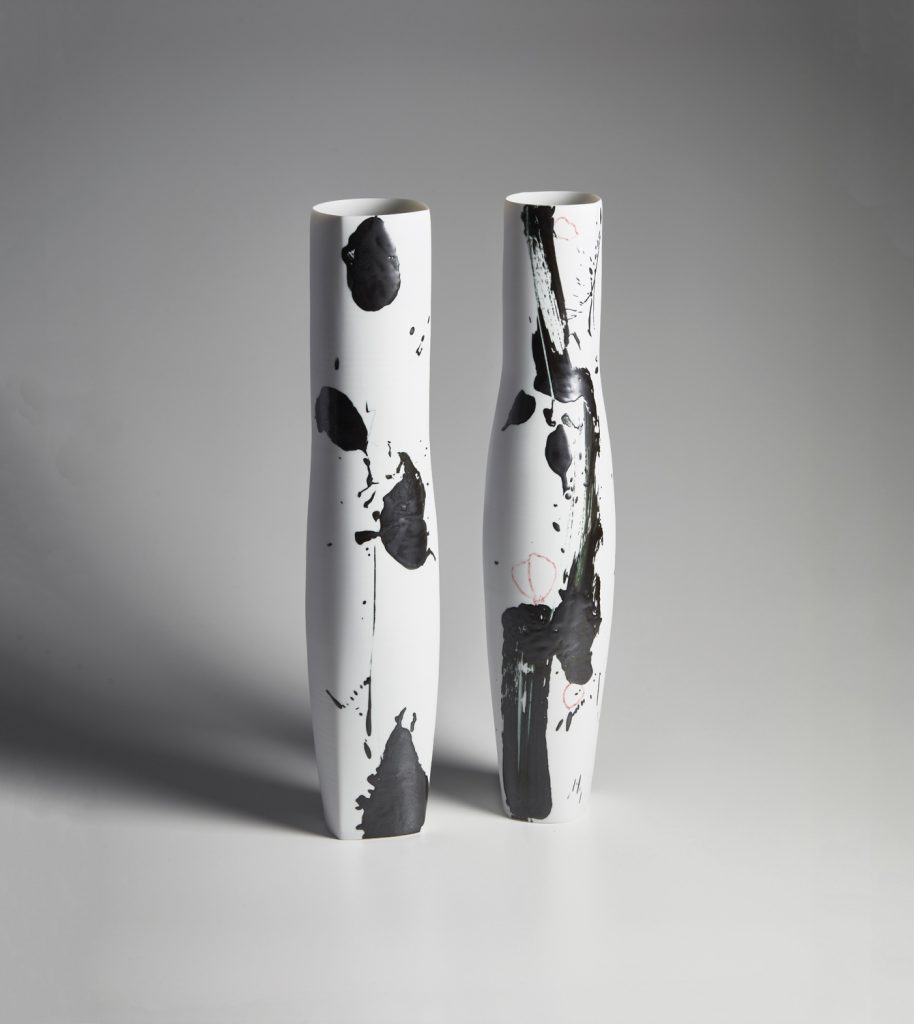
The exhibition at Galerie de l'Ancienne Poste focuses on the narrow, tall forms and large cylinders of white porcelain on which Karin Bablok develops the black enamel decoration, applied spontaneously with a brush, that has become characteristic of her personal expression over the years - the artist's main preoccupation being to seek harmonies between the black interventions that play inside and outside the pieces. Karin Bablok reacts intuitively to the contours of the volumes she creates. Using the dimensions of each piece as a guide, she weaves her way across the surface. As if in a pas de deux, painting and object unite, capturing that fleeting moment of balance.
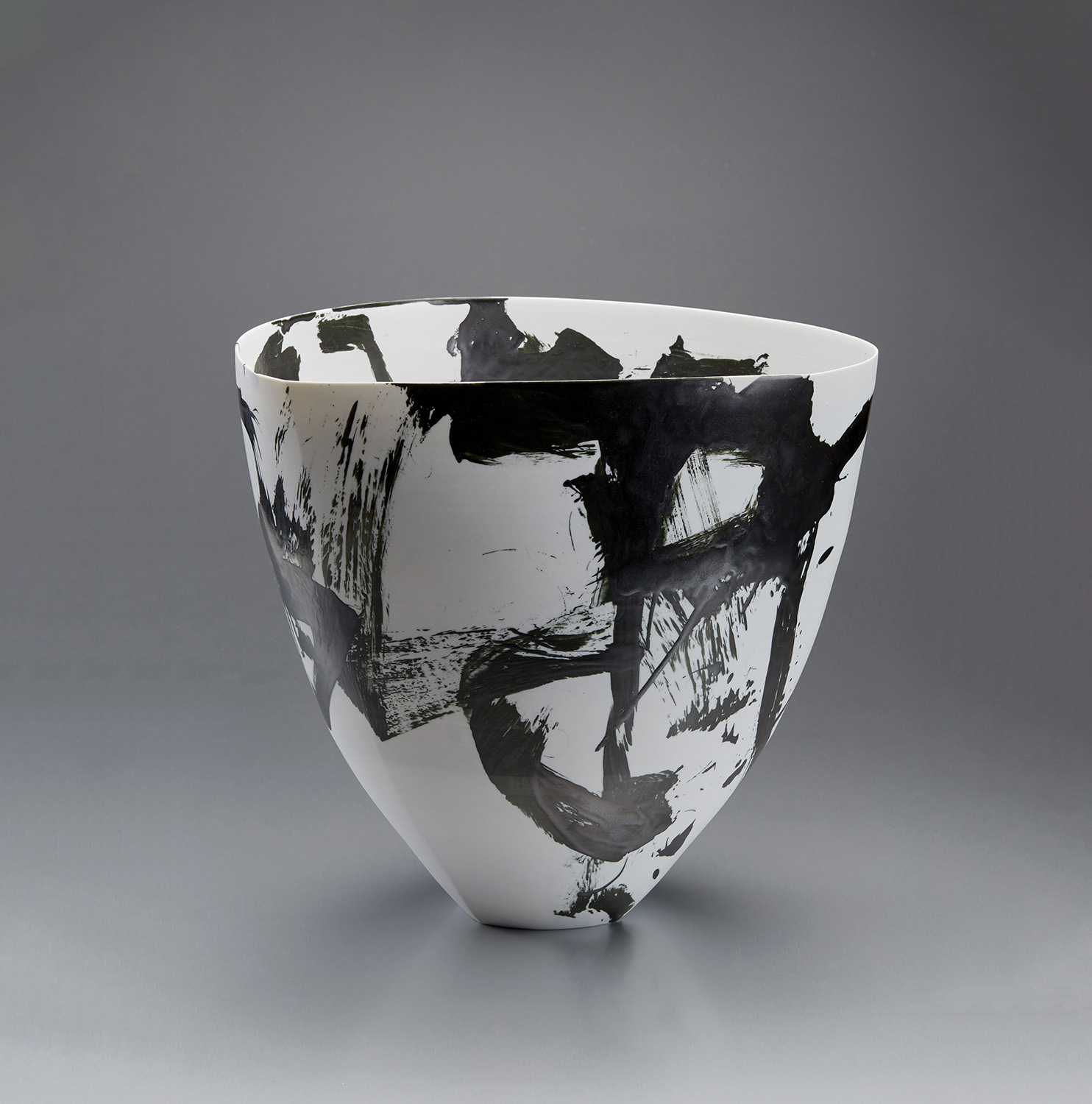
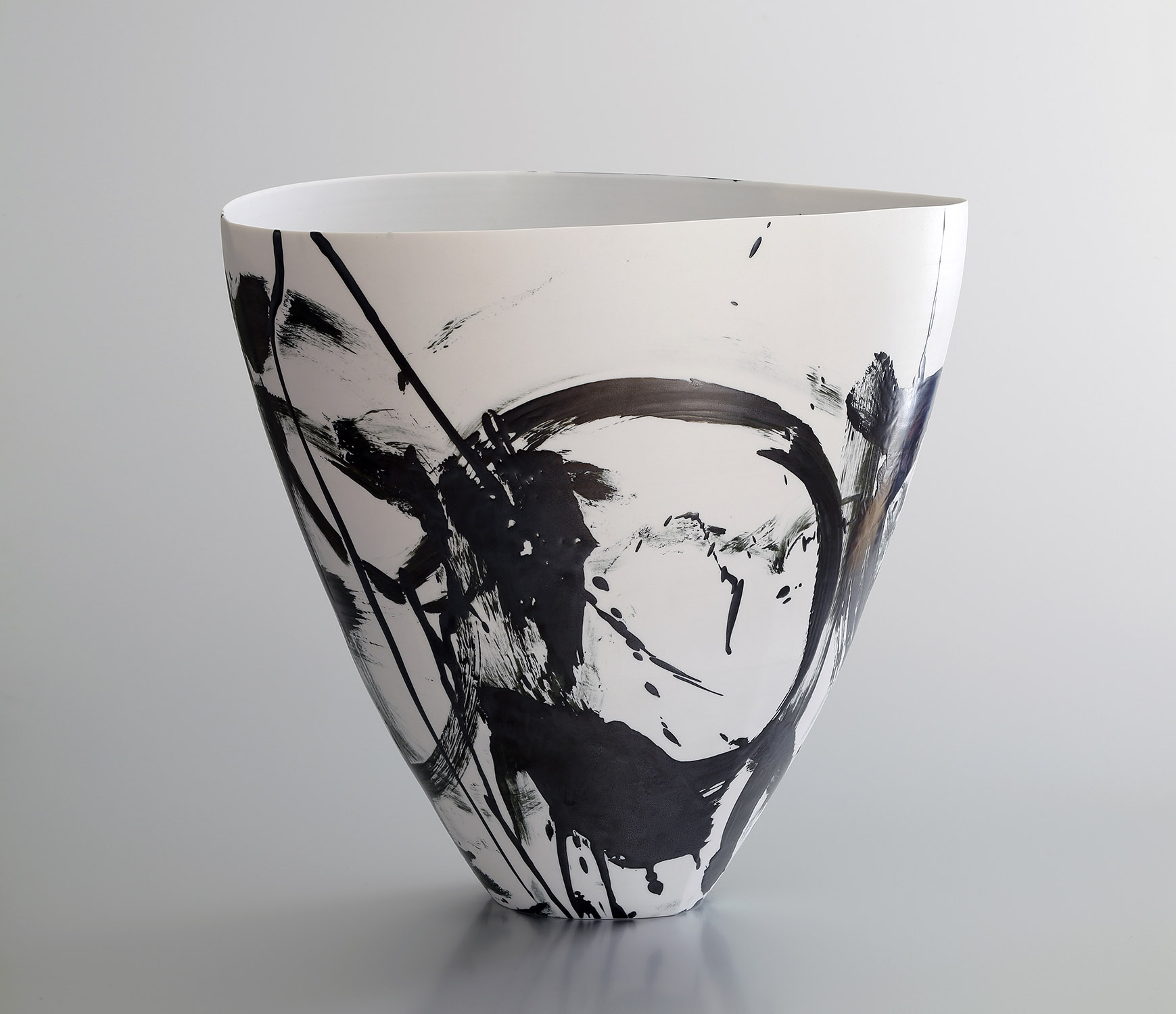
White surfaces sometimes invite the artist to give free rein to her brush. The result is a series of signs that might too readily be associated with calligraphy, but which in fact reflect Karin Bablok's admiration for the abstract painting of the 1950s. Indeed, she has long devoted herself to the study of painters belonging to the Action painting movement, and more particularly to the abstract expressionism of Franz Kline.
In Bablok's work, the gesture of the brush on porcelain remains conscious and controlled. His narrative background could also evoke the Chinese ink painting of the 1960s, echoing the plastic signs of painter and poet Henri Michaux. The signs, amplified or attenuated, reveal innumerable facets and a suggestion of multiple interpretations that tirelessly animate each object in perpetual motion. Herein lies the poetic significance of the twenty or so recent works on display, where mastery of form is combined with timeless artistic intuition.
 Karin Bablok
 Karin Bablok
 Karin Bablok
 Karin Bablok
 Karin Bablok
 Karin Bablok
 Karin Bablok
 Karin Bablok